


When I started teaching, there was no shortage of advice.
Some of it was good.
Some of it was bad.
And some of it was awful.
But the best advice I ever received is one I have shared with new teachers ever since:
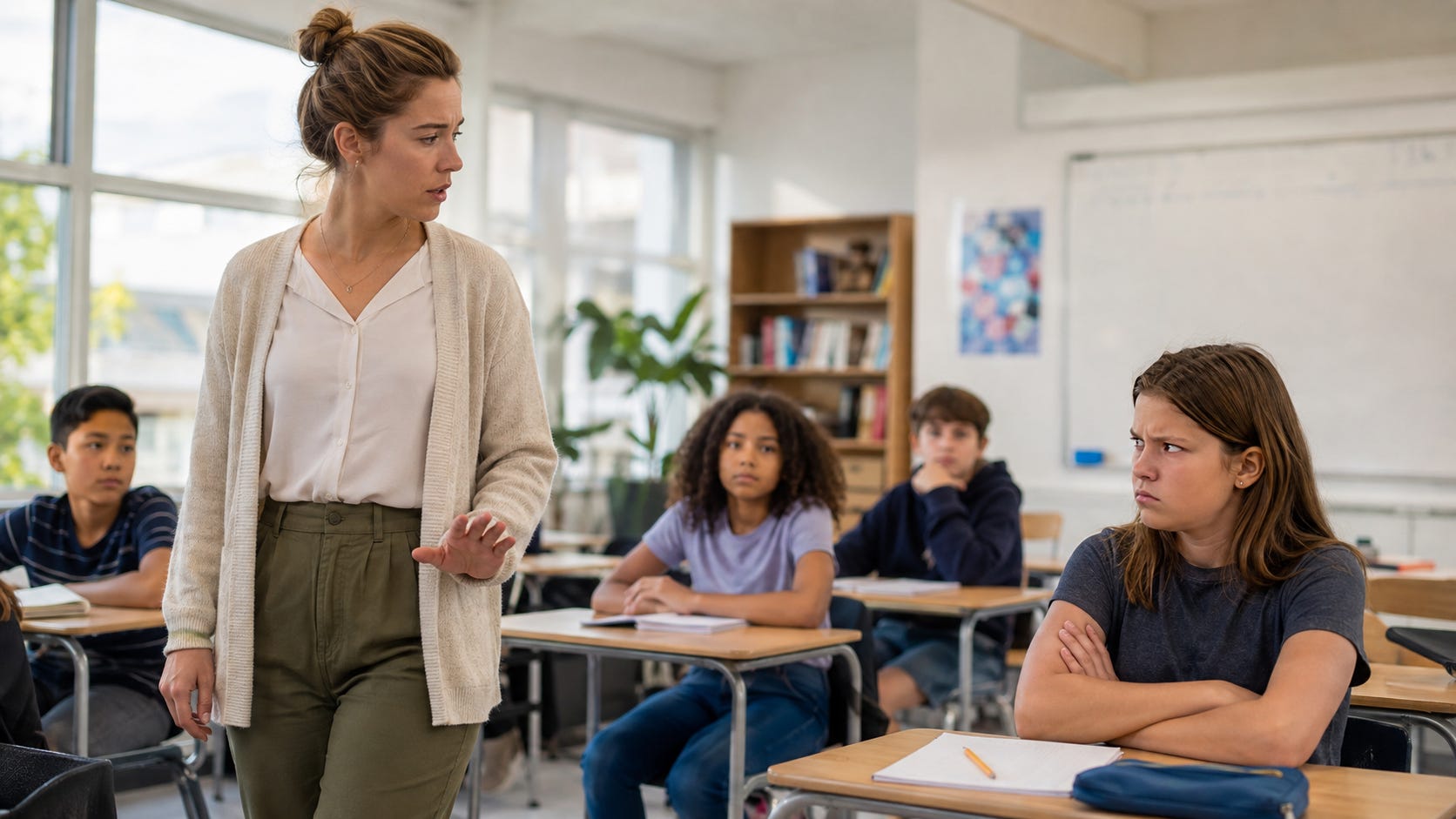
When a student pushes one of your buttons, step away.
When a student is escalating, be the one to create some space and give both of you time to calm down.
That pause gives the brain and the body time to settle.
It also gives you time to think about what you want to do next, rather than simply reacting.
New teachers are told to take control
You hear:
Be firm, even mean, from the beginning. You can always get nicer later, but once you lose control, you may never get it back.
Do not let students see weakness. Do not apologize. Do not give in.
Make sure they know who is in charge.
There may be good intentions behind that advice, but it can make every difficult moment feel like a win-or-lose situation.
And you believe you have to win.
You do not.
Sometimes the most skillful thing you can do is pause.
If you are the only adult in the room, say what you are doing out loud:
“I need to pause and take a breath. I’m going to step away for a minute, and then we will come back to this.”
That gives both you and the student space.
It models self-control.
It shows that you are human and that you have feelings too.
And it lets the rest of the class see what it looks like to recognize your frustration and make a different choice.
That is not losing control. That is modeling it.
A pause changes what happens next
When you and a student are both frustrated, more words rarely help.
The student is not carefully processing the lesson hidden inside the correction.
And you may not be choosing the words you will feel good about later.
Both of you may simply be reacting.
A pause interrupts that pattern.
It gives your brain and body time to settle.
It gives the student time and space to do the same.
And it creates the possibility that when you return to the conversation, neither of you has to win or lose.
You can simply decide what needs to happen next.
Find the part you can influence
Stepping away does not mean the student’s behavior was acceptable.
It is not about pointing fingers.
It means recognizing that when you are upset, you may not be able to respond in the way you want to.
That distinction matters.
You are not giving up.
The student is not winning.
You are giving both of you time for the brain to settle, become more flexible, and see the situation from another perspective.
It is fair to ask a student to consider your side.
But first, you have to be able to consider theirs.
When you fly off the handle, you lose that opportunity.
The most useful question is often not:
“How do I save face?”
“How do I prove to the rest of the class that I am tough and will not be walked on?”
It is:
“How can I model a skill that will help my students throughout their lives?”
You do not have to do this perfectly
Most classroom change does not come from one big breakthrough.
It comes from learning to:
Notice what is happening.
Keep blame out of it.
Find the part you can influence.
Model what you expect.
Practice it before it is needed.
You do not need another impossible standard to meet.
You need permission to pause, reflect, adjust, and try again.
You can be firm.
You can have boundaries.
You can be the adult in the room.
But you do not have to add more heat to prove it.
Thanks for reading.
If this brought a teacher to mind, please share it with them.
And if you have ever learned something important by stepping away from a difficult moment, I would love to hear about it in the comments.
Yes! Important advice! Thank you for sharing!
When a child is in an escalated state the brain is signaling fight or flight and they are unable to take in logic. They need a regulated adult. We are also modeling for all the other students in the room as well.
I disagree with any advice that sounds like "authority figure = jerk." The assistant principal in Breakfast Club comes to mind as the perfect anti- for me. Everyone, even children, deserve respect. As the only person with a fully developed prefrontal cortex, it is my job to model calm and kindness, while simultaneously have clear and consistent expectations for productive behaviors. I smile on day one, and my goal is to smile each of the 180 days I get to be with my students.