


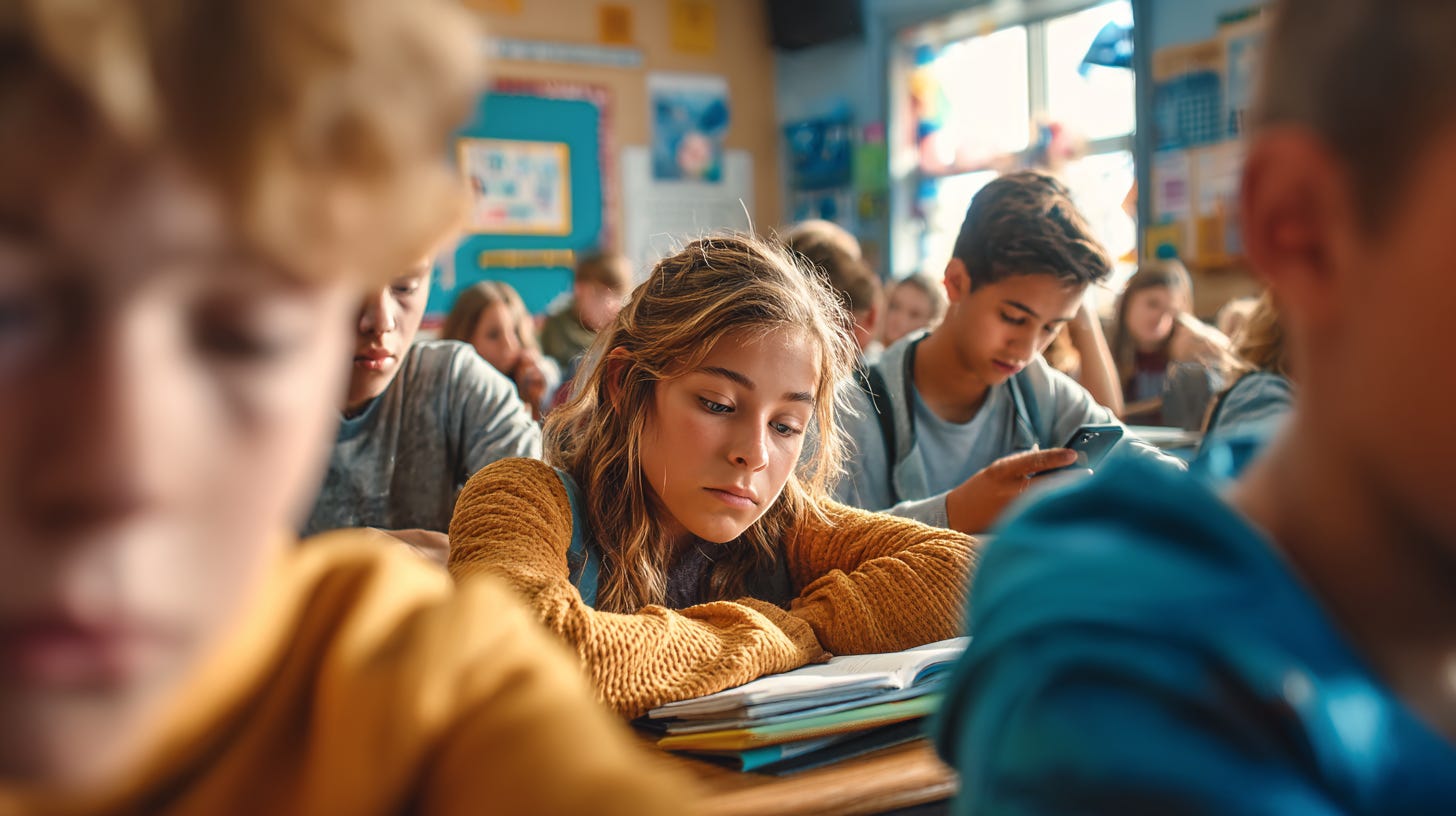
You can feel the shift. It’s not dramatic at first.
Students are still doing the work. Mostly. But getting started takes longer. Focus fades faster. They drift more easily.
And you’re feeling it too.
The same lesson pace and activities that worked a month ago now feel harder to achieve.
You’re trying to make them worthwhile as you navigate the mental and emotional drain that both you and your students are carrying.
By this point in the year, attention is less reliable. Not gone. Just harder to hold.
And when things start to slip, you feel it and see it: side conversations, slow starts, repeated directions, small challenging behaviors that build, and less emotional capacity to cope, for you and for them.
Down time isn’t neutral anymore. It quickly slips into something harder to manage.
Why It Feels Worse Right Now
This time of year is different. Not just because students are tired.
Because the conditions that support attention are gone.
Testing is over. Grades feel decided. Other classrooms are loosening up. The pull of being outside is real.
Students know it. They feel it all day long.
So when they walk into your room, they’re not starting from neutral.
They’re coming in carrying less urgency, less motivation to sustain effort, and more awareness of what they’d rather be doing.
The brain needs a reason to stay engaged. Right now, fewer of those reasons exist.
When a task runs long, it’s not just cognitive fatigue. There’s nothing pulling them to stay, and a lot pulling them away.
That’s why you see it faster now. Attention drops sooner. Patience runs thinner. Behavior surfaces quicker.
Not because students changed who they are. Because the conditions around them did.
The Simplest and Least Stressful Shift
Look at your lesson through a different lens.
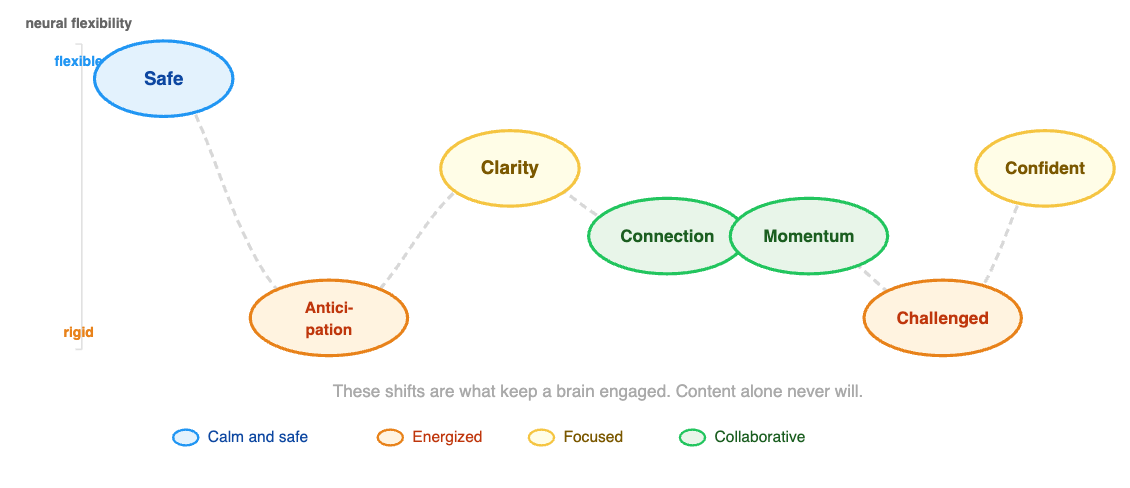
Think like a movie producer or a video game designer.
What keeps people engaged isn’t just content.
Safe. Anticipation. Clarity. Connection. Momentum. Challenged. Confident.
A great lesson isn’t just about delivering information. It moves people through those states deliberately.
The move now isn’t to give up on the lesson. It’s to change how it moves.
Shift between passive and active, collaborative and independent, light and more challenging. Shorten how long students stay in any one thing.
Instead of one long stretch, shift to micro-planning:
A short focused task. A reset. A collaborative task. A reset.
Not rapid-fire transitions. Not chaos. Just shorter, contained cycles that give students a chance to re-engage before distractions take over.
What This Looks Like in Practice
Start your next lesson like this.
“Beware. Listen closely. Recall Racing will be your challenge.”
That one line changes the room. Students lean in. They don’t know exactly what’s coming, but they know something is. That anticipation is doing real work before you’ve taught a single thing.
From there the sequence runs itself.
Teach and model for 5 to 7 minutes
Stop and Jot for 2 minutes — no notes, no talking, pure recall
Go and Gather for 4 minutes — students move, talk, give and collect ideas
Buzzer sounds, 5 seconds to seats, one collective breath together
Rethink and Rephrase — deep breath, review, add what you gathered, rewrite into one clear paragraph
Ask for a few volunteers to share
You’re 20 to 25 minutes in. And they’re ready again.
What comes next is now your call to make with real information in front of you. You’ve seen what they know, where they struggled, and what needs to come next.
That’s not just a strategy. That’s a different way of reading the room.
What You’ll Notice
Students get started faster. You repeat directions less. Fewer small behaviors build into bigger ones. The lesson feels more fun and manageable, for you and for them.
Why it works: ✅ Zone shifts enhance engagement and reset attention ✅ Recalling and writing strengthen memory consolidation ✅ Independent processing builds cognitive stamina ✅ Collaboration reinforces learning and builds confidence.
I'd love for a few of you to try this and let me know how it goes. Seriously. Tell me what happened.
Next up: three weeks left, and students are resisting effort. Directions feel like suggestions. Starting the work has become the hardest part. That’s where we go next.
Debbie Leonard is a veteran educator and co-founder of BrainZones. Her work focuses on the realities inside the classroom, connecting neuroscience, lesson design, and student behavior.
Very cool idea! Shorter cycles. Deliberate zone shifts. That’s definitely the move this time of year.
What I found particularly interesting here was the emphasis on attention not simply as an individual trait, but as something heavily shaped by environmental conditions and lesson structure itself. The comparison to film and game design was especially thought provoking.
I’d be really interested to know whether you think most schools still underestimate just how much behaviour is shaped by lesson design and cognitive engagement conditions, rather than by behaviour systems alone?