


All experienced teachers are familiar with the “honeymoon period,” the window at the start of each year when students are more compliant as they learn about what’s important to you. They are keyed in on you, absorbing the vibe and tone you are setting. Is this teacher mean? Do they seem friendly and approachable? Are they funny?
And for a week or two, you think, Wow, this is going great.
But as the days slip into weeks and months, students become more comfortable with the rules and routines, while also figuring out what academic demands lie ahead. When the struggle with content surfaces, when fear of embarrassment becomes a real possibility, when a teacher’s comment or question begins to feel like a put-down, or when failure starts to feel like a matter of time, behavior problems can begin to surface.
Once a student’s brain senses threat, that early willingness to go along begins to dissolve. An I’ll get you before you get me kind of defense can start to take over.
So our goal is not to extend the honeymoon period. Nor is it to tiptoe around difficult content and challenges. Nor is it to shy away from setting firm expectations.
The goal these first few weeks should be to show, model, and design experiences that represent what you value.
Because while students lay low, they are sorting out how your classroom operates. They are deciding whether it will be a safe place for them to learn and grow or whether they need to put up fences and retreat.
Actions Speak Louder Than Words
How do you demonstrate what matters? First and foremost, ask yourself what you notice and comment on during class? What gets your attention? Do you focus on the rules? Do you notice and talk about the behaviors and actions you want to see, or are you emphasizing what you don’t want to see?
Those small interactions help shape how students feel about you and your classroom. And that matters. Decades of research have linked students’ sense of belonging and their relationships with teachers to engagement and academic success...
If those are things you say you value, what can you plan that represents those values? Don’t misunderstand. Your rules and procedures matter very much. They are core to how your classroom operates, but they don’t really communicate anything about what you value.
What experiences might demonstrate that you value grit and determination? How might you show that you value kindness, respect, and an open mind when students collaborate with peers? Maybe it is a combination of both fun and hard work you want to see.
Instead of spending the first week saying, “Don’t shout things out,” plan an activity where students experience what productive discussion sounds like. Instead of repeatedly reminding them to respect one another, give them a reason to practice what respectful disagreement actually looks like.
Whether you are a new teacher or an experienced veteran, take a moment to think about what you value most. Is it compliance and silence? Or is it more about how you want students to feel and experience learning?
What might that look like?
All learning is tied to emotion, and I think that needs to be a core value for every educator. For learning to happen, students need to feel physically and emotionally safe. Everything else falls under and supports safety.
That matters because when the brain senses a threat, it puts up roadblocks and interferes with the pathways we need for learning. Building trust and respect can help keep those defenses from going up.
Here are a few things I used during the opening days of the school year over my 35+ years of teaching.
Emotional and physical safety come first: Talk with students about what that actually means. Put them in small groups and have them create a T-chart. On one side, list behaviors, actions, or words that could feel threatening. On the other, list the things that would help them feel safe. Follow this up by letting students volunteer to role-play different examples of safe and unsafe interactions.
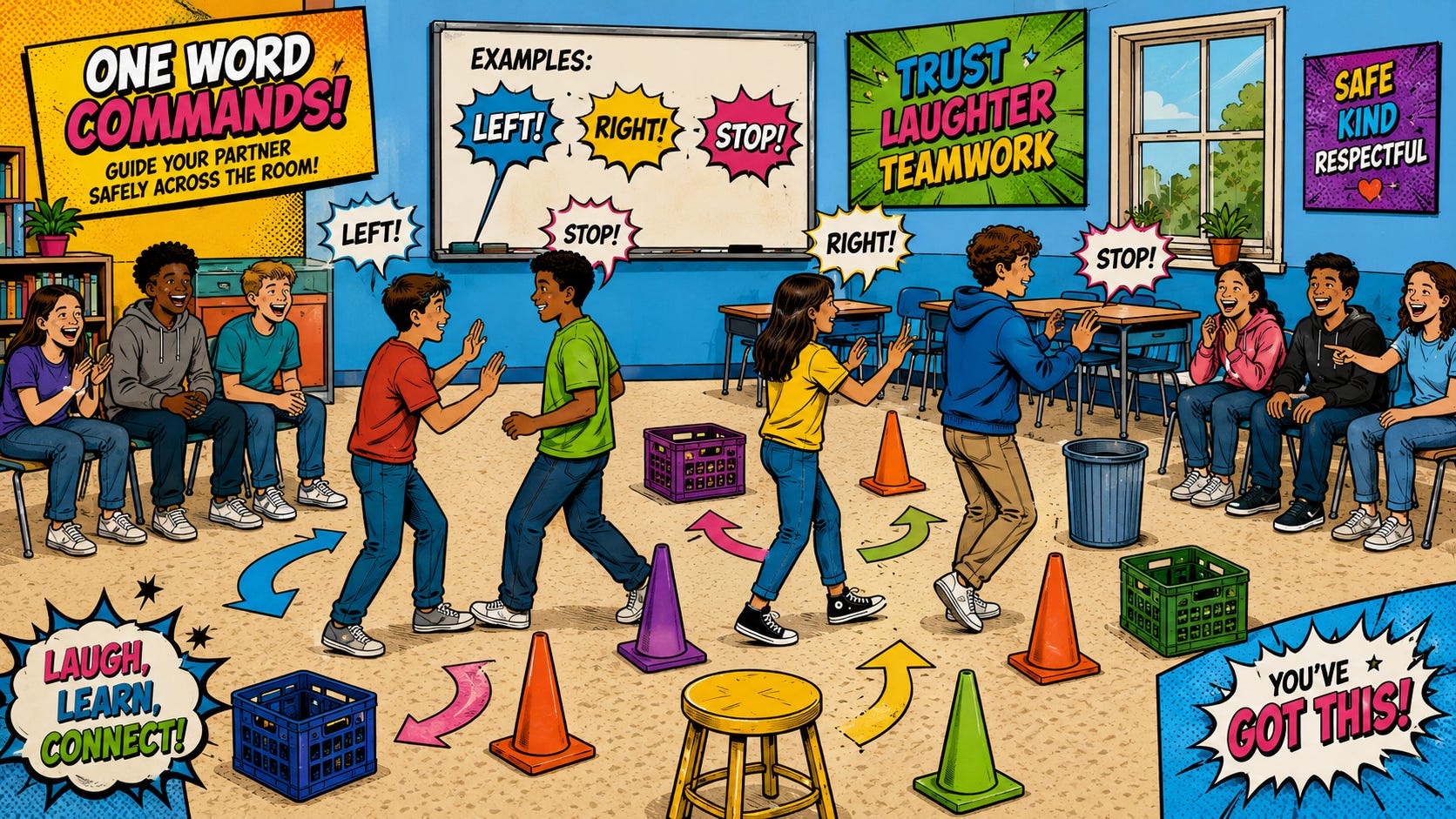
Trust and humor: This is a close second to safety. Trust helps to build safe environments. Without trust, there is no safety. Pair students and have one walk backward across the room while their partner guides them using only weird sound effects and one-word commands such as “Left!” “Right!” or “Stop!” Let two groups go at a time. The mix-ups usually get everyone laughing, while the student walking backward has to rely on their partner to get them safely across the room.
Students are learning what your classroom is like from what happens in it, not from what you tell them it’s going to be like.
Before the honeymoon ends fill your students’ days with experiences. Guide those experiences by noticing and calling attention to the behaviors, actions, and words you want to hear. Let students practice how to work in groups during class. Tell them specifically what you are listening for and reinforce it when you hear it.
Set up as many opportunities for success as possible so your students can be directly immersed in what the expectations look like, feel like, and sound like.
Have a great week,
Debbie